Death to the Thank You Slide
What happens when a presentation coach tells 17 PhD students to stop introducing themselves.

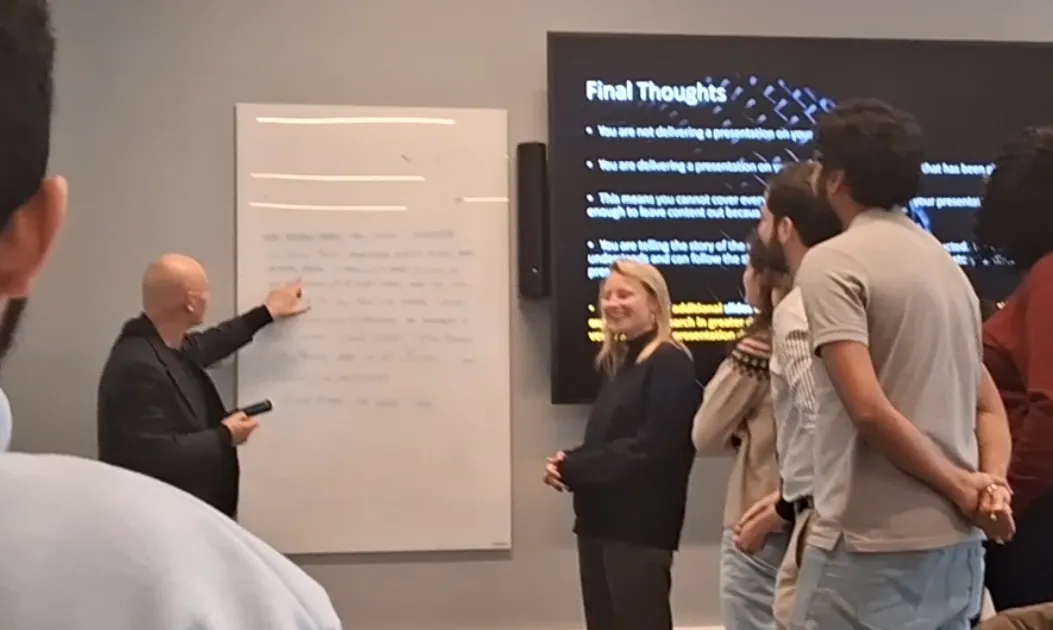
As part of AIMSIR training, 17 of us spent two days with Eric Fitzpatrick (ARK Speaking and Training), who brings a wicked sense of humour to challenging how people communicate. Some of his clients have used these approaches to secure multi-million euro deals.
His first exercise set the tone. We closed our eyes and followed instructions to fold and tear a piece of paper. When we opened them, everyone had a different result. The point was clear: if your speech is not precise, your audience fills in the gaps, and not always correctly.
Before this, I approached presentations without any real strategy. Now I see that there are deliberate structures behind how you speak, like engaging the audience the way Eric’s exercise did, or using rhetorical questions as transitions. I always presumed those things were too gimmicky for academia.
On the first day, my group’s task was to persuade an American travel agency to bring tourists to Ireland. Afterwards, each individual speaker was critiqued in front of the room, and encouraged to do parts again, trying new things.
The second day was more personalised. Six people per two-hour slot, each bringing slides from a previous talk. The one-to-one feedback was easily the most valuable part. It made me rethink how I approach my first RSP meeting, and especially how I frame my literature review.
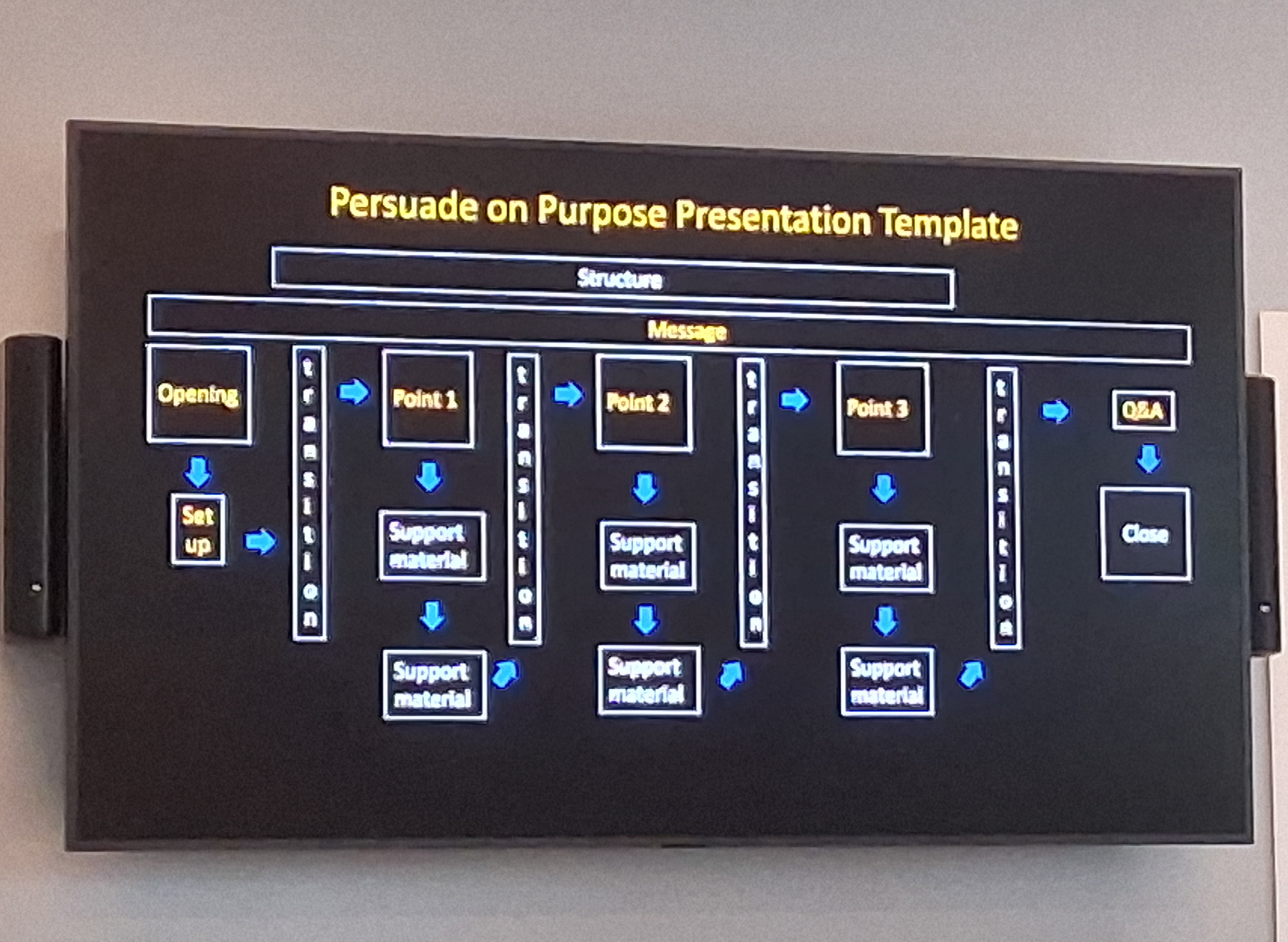
Some things that stayed with me:*
-
Your objective is always to persuade your audience to something. One presentation should deliver one message. If you have too many, take it one level up.
-
No introductions necessary. Start with a rhetorical question or statement that engages.
-
You cannot be the hero of your own story. It lands better when it is about someone else or something broader.
-
Order matters, like a punchline. “33 million people in America have Irish ancestry” is not as impactful as “In America, 33 million people have Irish ancestry.”
-
Reveal bullet points one at a time to control the flow of information.
-
Slides are the supporting actor; your speech is the main one.
-
Stand to the left of your slides. If using an image and title, place the image on the left.
-
Don’t overproject; it’s a conversation.
-
No “thank you” slide. Leave your key message up, as it may stay visible during breaks and maximise impact.
*Also, anyone late back from break had to sing “Oh Baby Baby” by Britney Spears.
More from this track
While working on my thesis, I found myself frustrated with my old template. I've since switched to a much more nicer setup, and in this post is a short description of it with some links and context.
Found a Cool Thesis Template
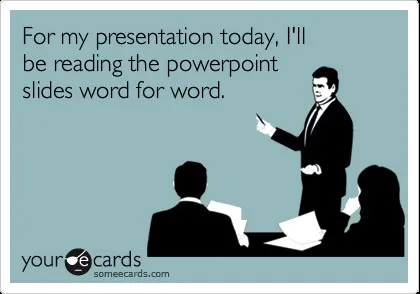
I just did my first Research Studies Panel. Here's what I wish I'd known going in.
RSP: Rehearse, Stress, Pass
From ChatGPT copy-paste to agentic assistants: expanding the kitchen with Claude Code.
Leave a comment