COST Action: More Than I ANTICIPATEd
Two days in Glasgow on multi-hazard prediction at extended-range timescales. Here's how my first COST Action meeting went.

Last week I was in Glasgow for the first General Meeting of ANTICIPATE, a European COST Action on multi-hazard prediction at subseasonal-to-seasonal timescales. About 25 researchers from across the working groups spent two days at the University of Strathclyde, debating the best path forward for its goals. My supervisor Fiachra co-leads working group five, and I’m a member of the first (sources of multi-hazard predictability) and second working groups (linking multi-hazards to extended-range predictions).
Day one
The evening before an ice-breaker was planned at Shilling Brewing Company. I thought this would be a great opportunity to put my nerves to bed. And it was - we ended up staying late and doing a pub quiz!
ANTICIPATE kicked off the next morning on the 9th floor of Strathclyde’s Technology and Innovation Centre. Coffee, badge, chat.
Jenty Kirsch-Wood from UNDRR gave a keynote that stuck with me. She argued that without a multi-hazard-based early warning system, humanitarian response to disasters gets caught in a cycle of rebuild-and-repeat. This can undermine a country’s ability to manage things like inflation and debt.
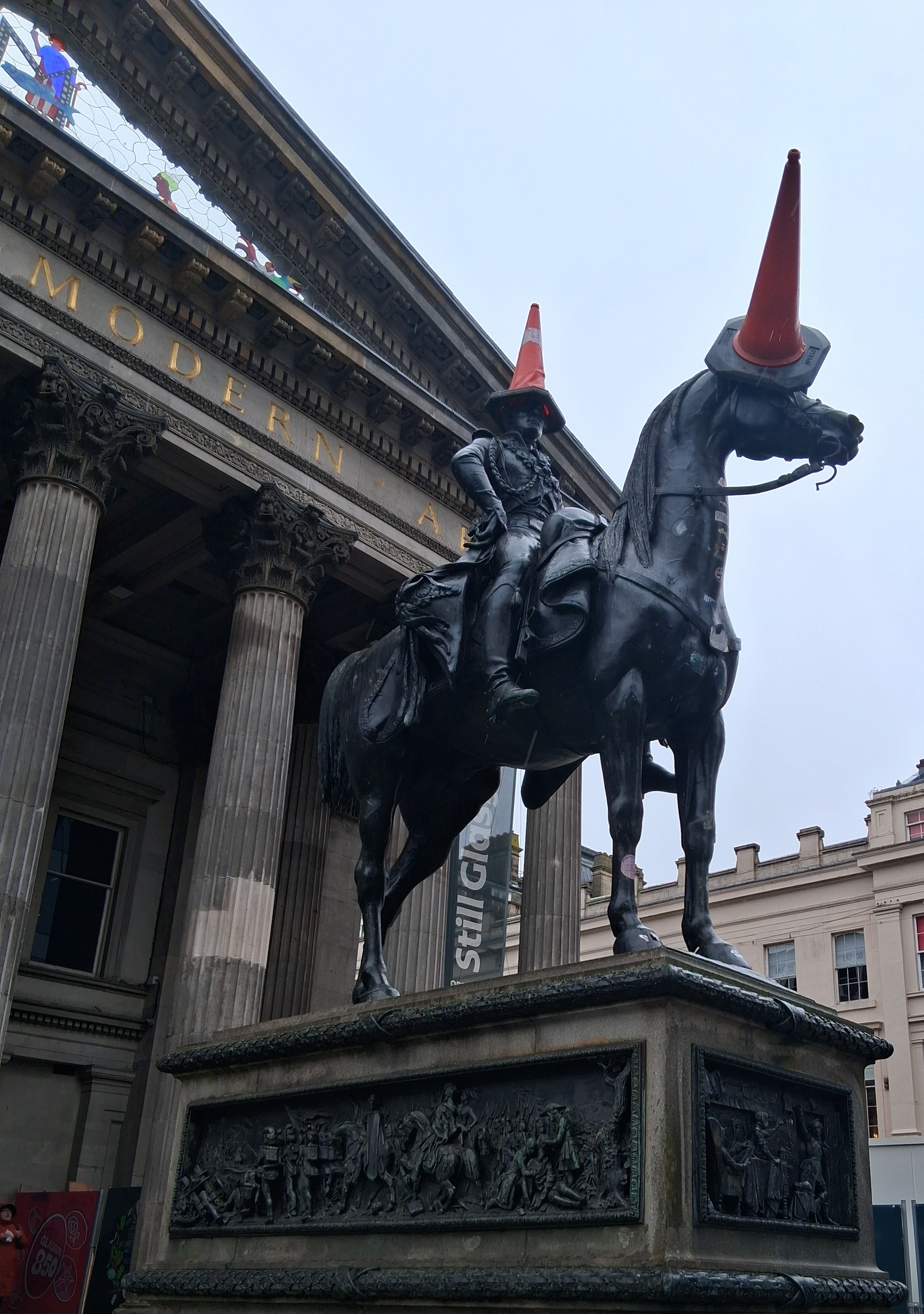
I was one of the youngest there. A few second and third year PhDs, but the vast majority there have settled into their careers. If you’ve been to Glasgow, you’ll know the Duke of Wellington statue outside the Gallery of Modern Art who always has a traffic cone on his head. That’s roughly how I felt walking in with my lack of real experience. But during the group sessions, I realised that the amount of literature reading I had done allowed me to actually contribute to discussions.
The World Cafe
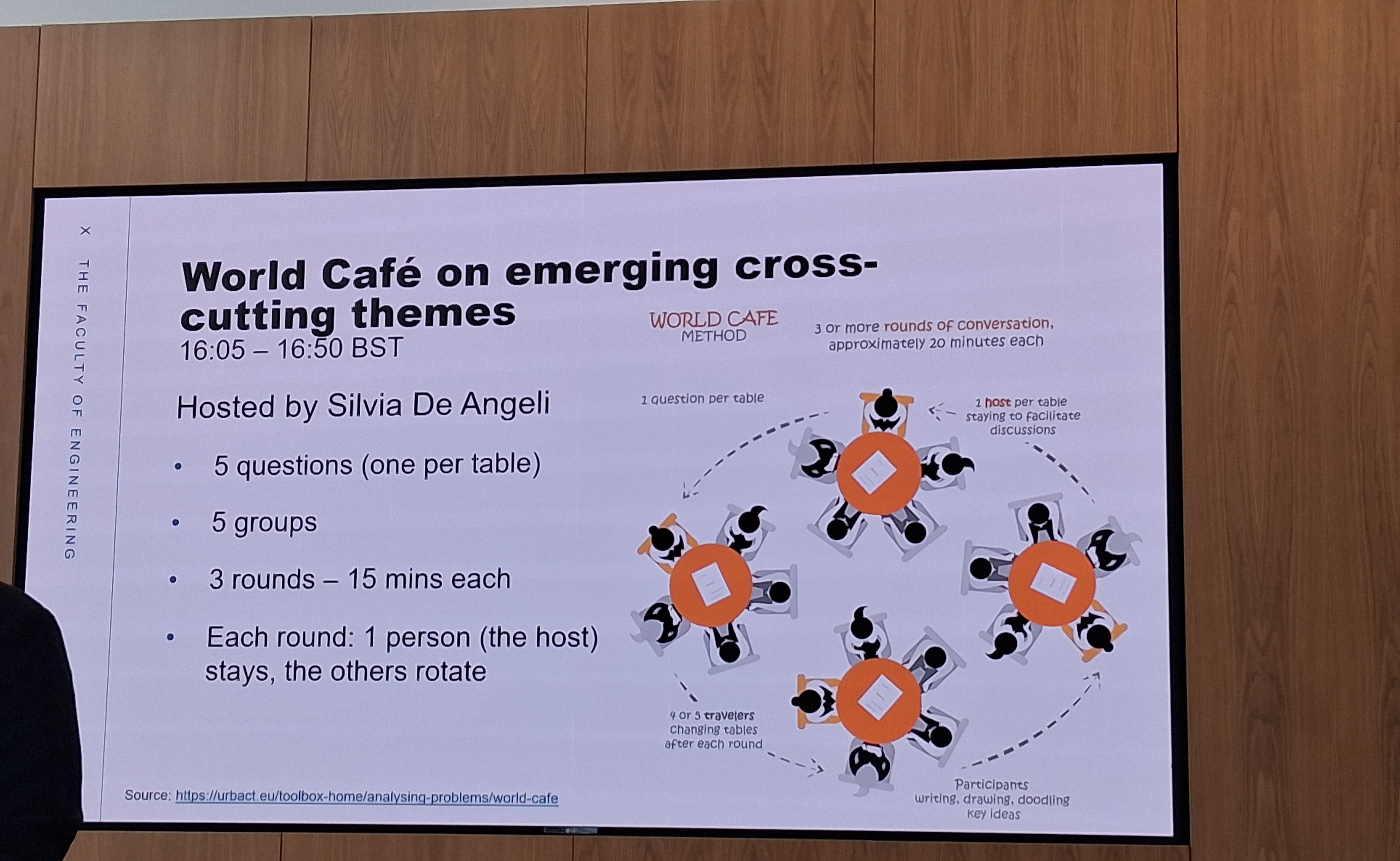
In the afternoon, we did a World Cafe. Five tables, five questions, each hosted by a working group lead. You sit down, brainstorm for 15 minutes, then rotate to the next table and build on what the last group wrote. The questions ranged from big-picture (what makes a multi-hazard forecast product credible to a stakeholder?) to practical (what are the best visualisation practices? does language or colour choice create barriers?). All parts of the pipeline, from data to operational product were touched on.
Day two
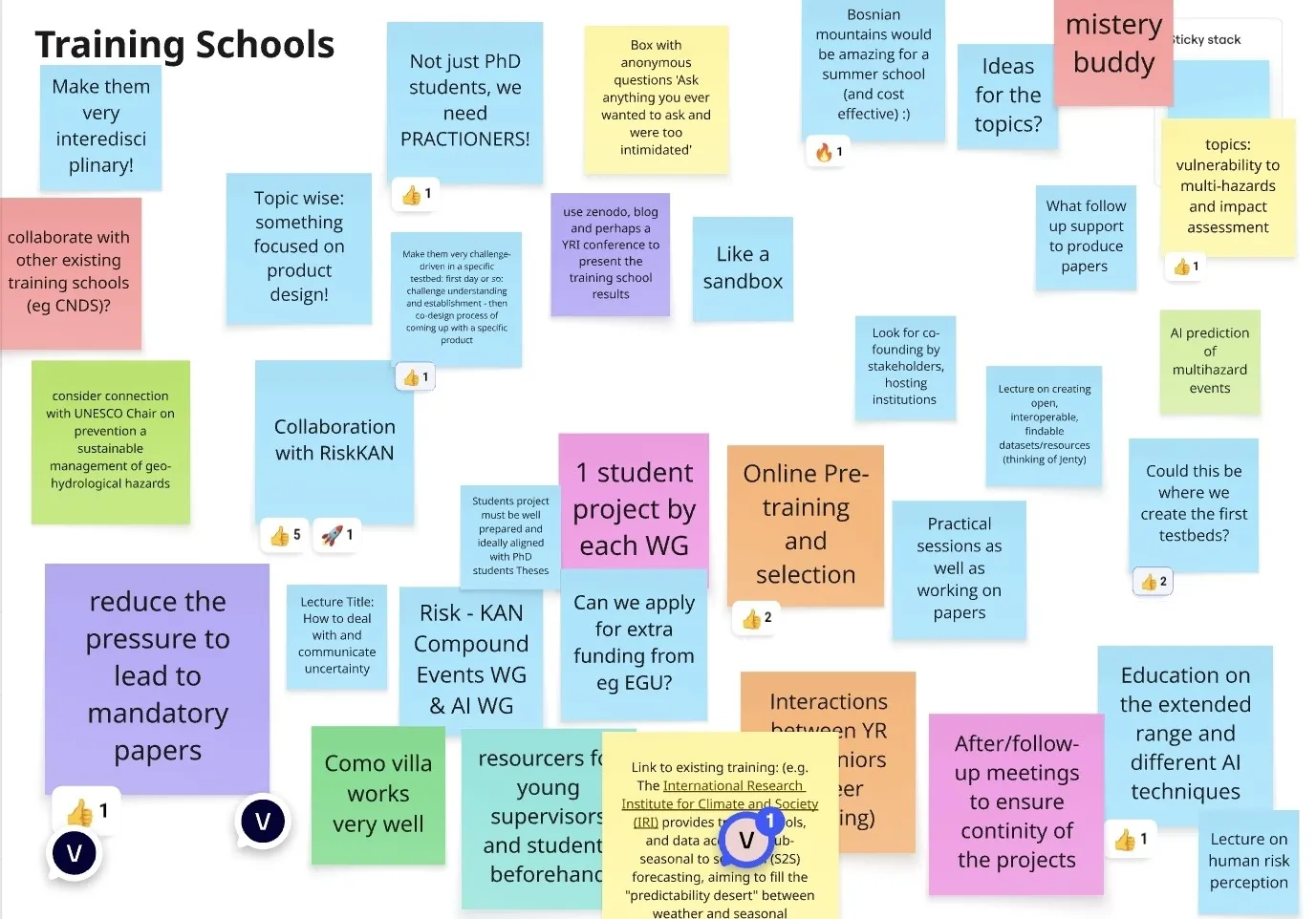
The second day had a panel discussion with the group leads, paired with a live Miro board where anyone could post thoughts and questions in real time. The focus was on training schools, short-term scientific missions, and outreach.
At the end, we did a Mentimeter quiz on what outputs we expected from the COST Action (world domination being one of them), and what newspaper headlines would reflect on the COST Action by the end (Breaking news: the ECMWF has folded into ANTICIPATE!).
What I took away
-
The terminology problem is real. I’ve spent weeks trying to reconcile how different papers define multi-hazard events, compound hazards, and cascading risks. Turns out the field itself hasn’t settled on consistent definitions either. A shared problem, not a gap in my reading.
-
I am excited for the early-career support. There are plans for one-on-one follow-ups after training schools, and dedicated break-out sessions for Young Researchers and Innovators at major conferences.
-
Where my work fits. My thesis sits between multi-hazard predictability and extended-range forecasting, which is exactly the WG1-WG2 overlap. Seeing those connections on poster paper did more for my understanding of where I sit in the broader community than all of my reading had.
This meeting could not have come at a better time for me. In ten days time I will be in Lausanne, Switzerland, for a joint meeting of working groups one and two. With my RSP, the PhD Seminar, and this COST Action all in one week, my little cone-head has been left with an olympic swimming pool of thoughts.
More from this track
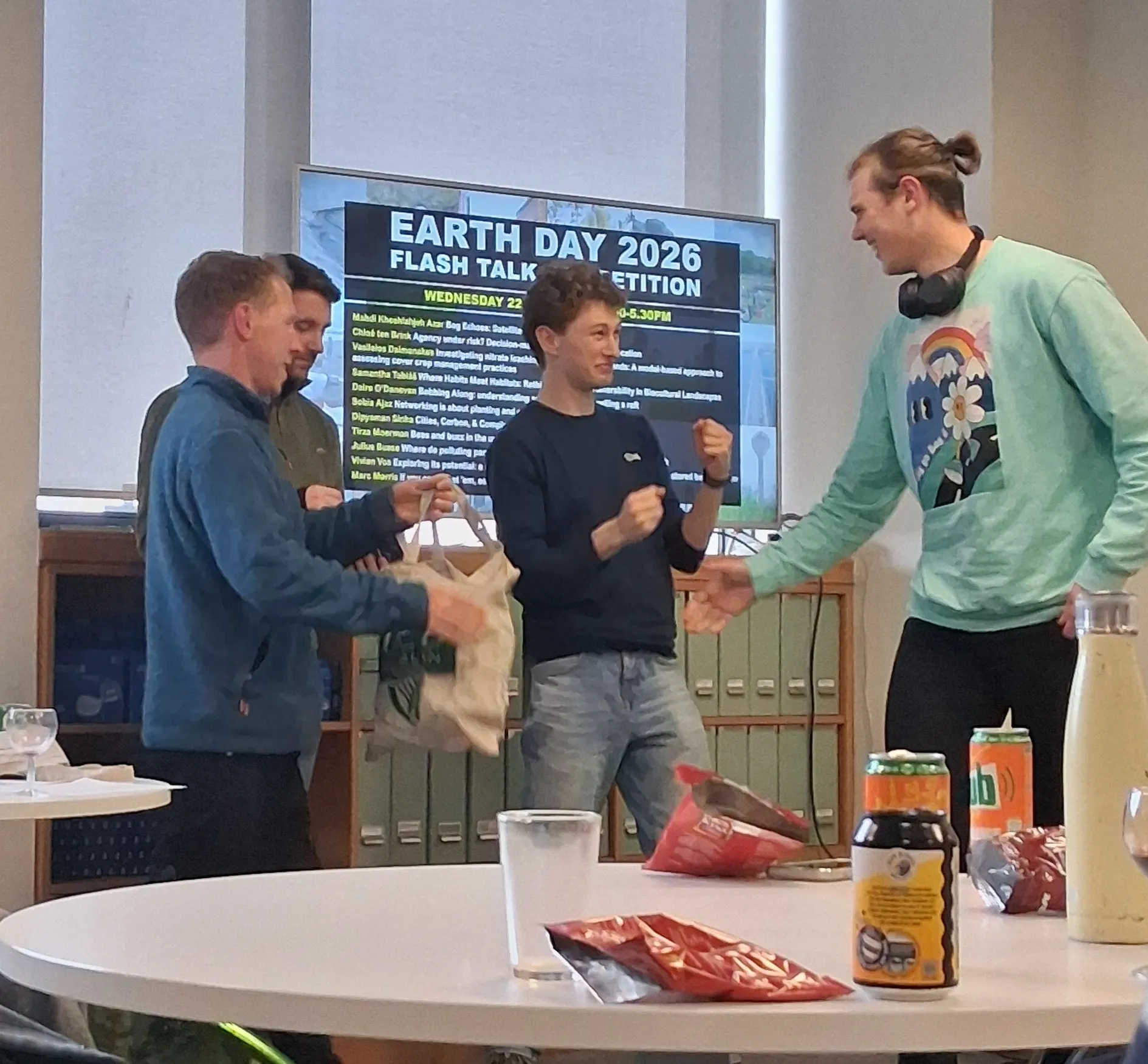
Two minutes, one tied vote, and zero equations.
Earth Day Flash Talks!

Coffee mornings are back in Science North. Alternating Tuesdays and Thursdays at 11am.
THE RETURN OF COFFEE MORNING

What the first 18 iScholars learned from serial entrepreneurs and a former CNN anchor at Avolon HQ!
Leave a comment