iScholars: FAIL Candidly, Love Ya!
What the first 18 iScholars learned from serial entrepreneurs and a former CNN anchor at Avolon HQ!


You may have heard of the Decarb-AI programme, which I’m a part of. If not: it’s the first national centre under the Innovate for Ireland programme, funded by Research Ireland and AIB to the tune of €5.7 million. It’s all about using AI to help decarbonise Ireland.

Innovate for Ireland came out of a white paper called “Project i” by Dómhnal Slattery, who founded Avolon (now the world’s second-largest aircraft leasing company). His argument was that countries with populations similar to Ireland’s were spinning out far more companies from their research base, and he wanted to know why. The fix: give PhD students entrepreneurship and innovation training alongside their research. That’s where iScholars come in. The programme aims to have 1,200 iScholars over the next decade, but right now we are the first cohorts, with only 18 of us! On top of the usual work of a PhD, we get special training in innovation and entrepreneurship.
The day
Last Friday we headed to the Avolon headquarters in Ballsbridge for a day with the other iScholars. The view over the Aviva was class.
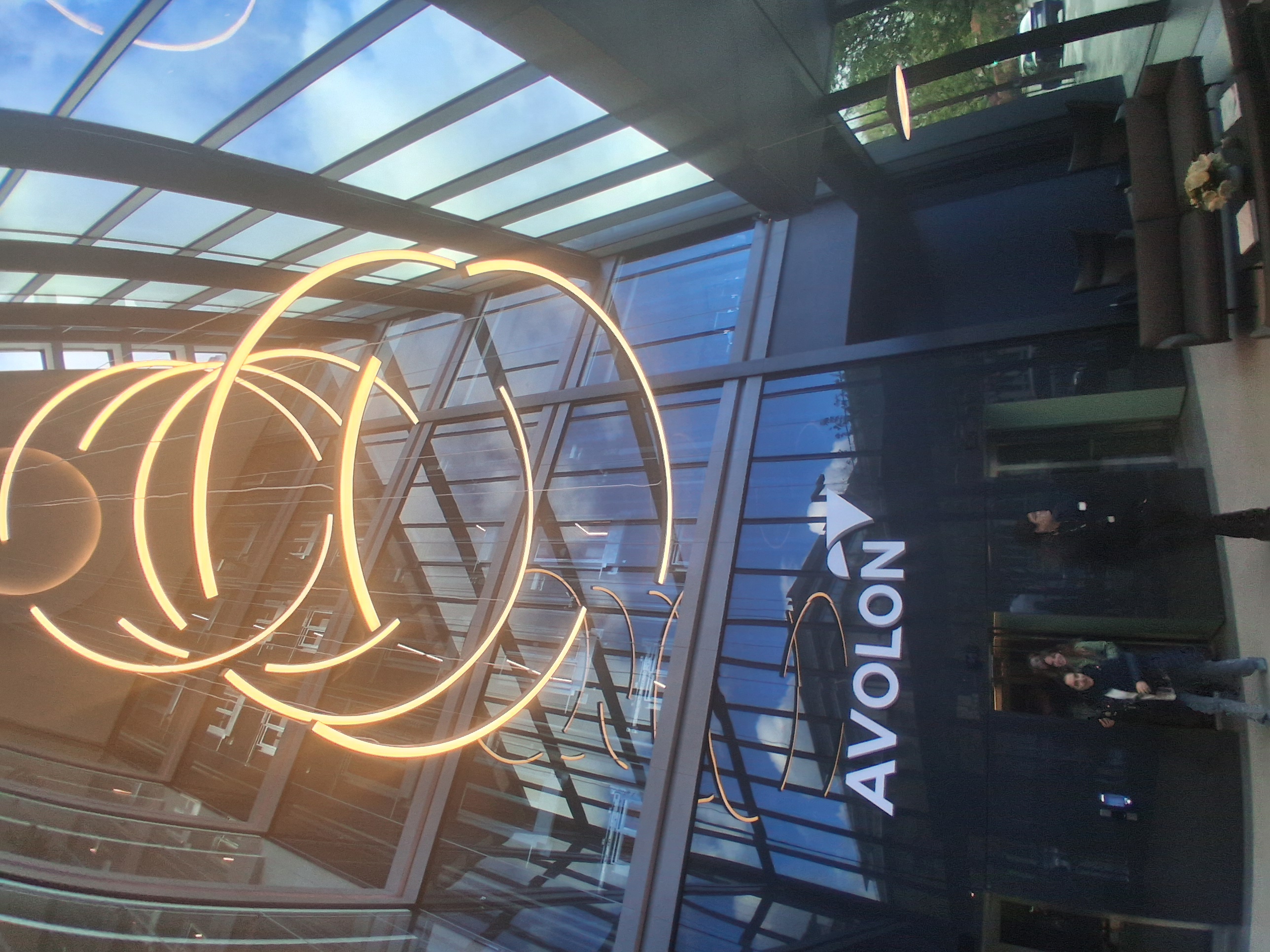
Myself and Blanaid were whisked away before the day started to give some video interview clips. I’m glad I’d practised the questions in advance because it’s hard not to blank on the spot.
Dómhnal Slattery
First up was Slattery himself. He’s now Chairman of Vertical Aerospace, who are developing the Valo - an air taxi promising Heathrow to Canary Wharf in about 12 minutes instead of 60+ by car. He even said next year they might bring us over and let us have a go in one! After genuinely encouraging words about failing boldly, he signed off with a “Love Ya!”.
Simon Boucher
Simon Boucher, CEO of Global Innovators Ireland, was the MC. He has this very clear, directional way of speaking that could convince you of anything. I noticed every speaker we met had that same quality, a calm certainty that I have never had when speaking.
DC Cahalane
DC Cahalane was my favourite. He was head of marketing at Trustev, which sold for $44 million. He’s a ‘serial entrepreneur’.
One story stuck with everyone. He set up a side business in an evening: an affiliate-link hotel booking site for entrepreneurs who need a desk in their room. €4,000 a month, no maintenance. A penny on the floor for someone like him, but a brilliant example of what can be achieved in an evening.
He talked about using Claude by voice to build out business plans, asking it questions to stress-test his thinking. He said LLMs are great for planning for multiple forks in the road before your business has committed to any of them. “Trust but Verify.”
His two takeaways were:
- Put your health first.
- Have fun with it. Don’t pressure yourself to have the greatest idea.
We did a game where we were handed prompt cards and had to pitch a Dragon’s Den business idea after about 5 minutes. Pitches ranged from a “Cooking Mama-style game that files your taxes in the background” to our own team’s “Airbnb-meets-Uber restored-car motel.”
Gina London
Gina London is a former CNN anchor who now does international communications coaching. She oozes charisma and loveliness to everyone in the room, from the barista who served her coffee to us students. She gave a very compelling story about being a little girl who mumbled, and an older neighbour who would taunt her for it. She has this emotional appeal that had the room opening up about why we’re all so scared of public speaking.
She taught us how to use one foot as an anchor when moving during a presentation, and how projecting your voice can slow your pace.
Rob Mac Giolla Phadraig
Last talk was from Rob Mac Giolla Phadraig, who founded SkillStack, a video platform for “power skills” like critical thinking and resilience. He mentioned that some of their faculty have NASA connections, and that a senior NASA figure said the platform made them realise NASA wasn’t reaching its full potential in skills development.
He talked about the difference between creative and critical thinking, why candour matters for redirecting bad ideas early, and the difference between “big swings” and “little things” (he called it microdosing innovation). His main takeaway: FAIL (First Attempt In Learning).
Past the starting line
I left wanting to get straight back to work that evening. If anything stuck from the day, it’s that the PhD isn’t the destination, it’s the vehicle. Not unlike our Dragon’s Den pitch, it might look like a banger on the outside, and there’s a big rattle to get going, but it’s a temporary home for now.
More from this track
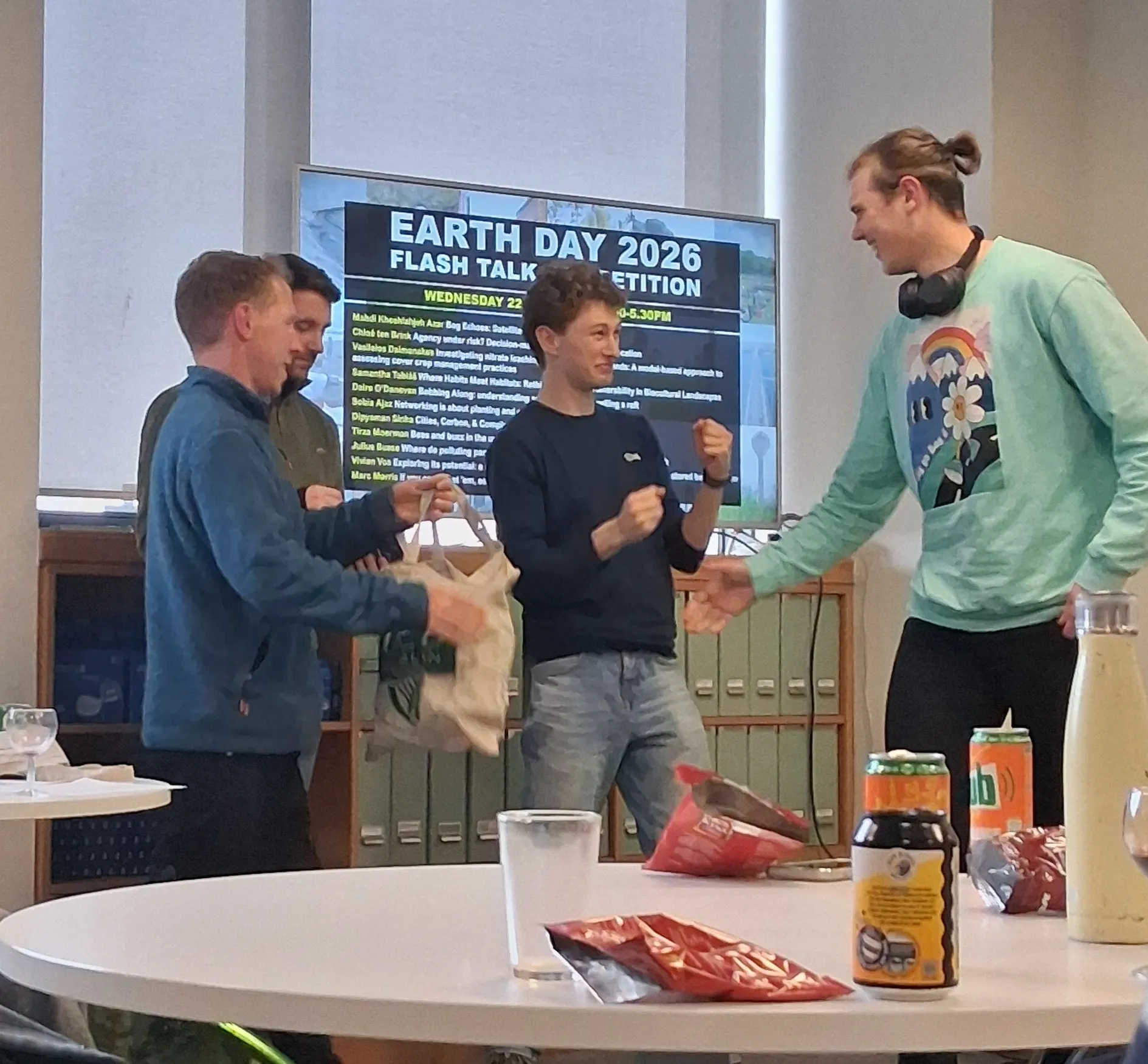
Two minutes, one tied vote, and zero equations.
Earth Day Flash Talks!

Coffee mornings are back in Science North. Alternating Tuesdays and Thursdays at 11am.
THE RETURN OF COFFEE MORNING
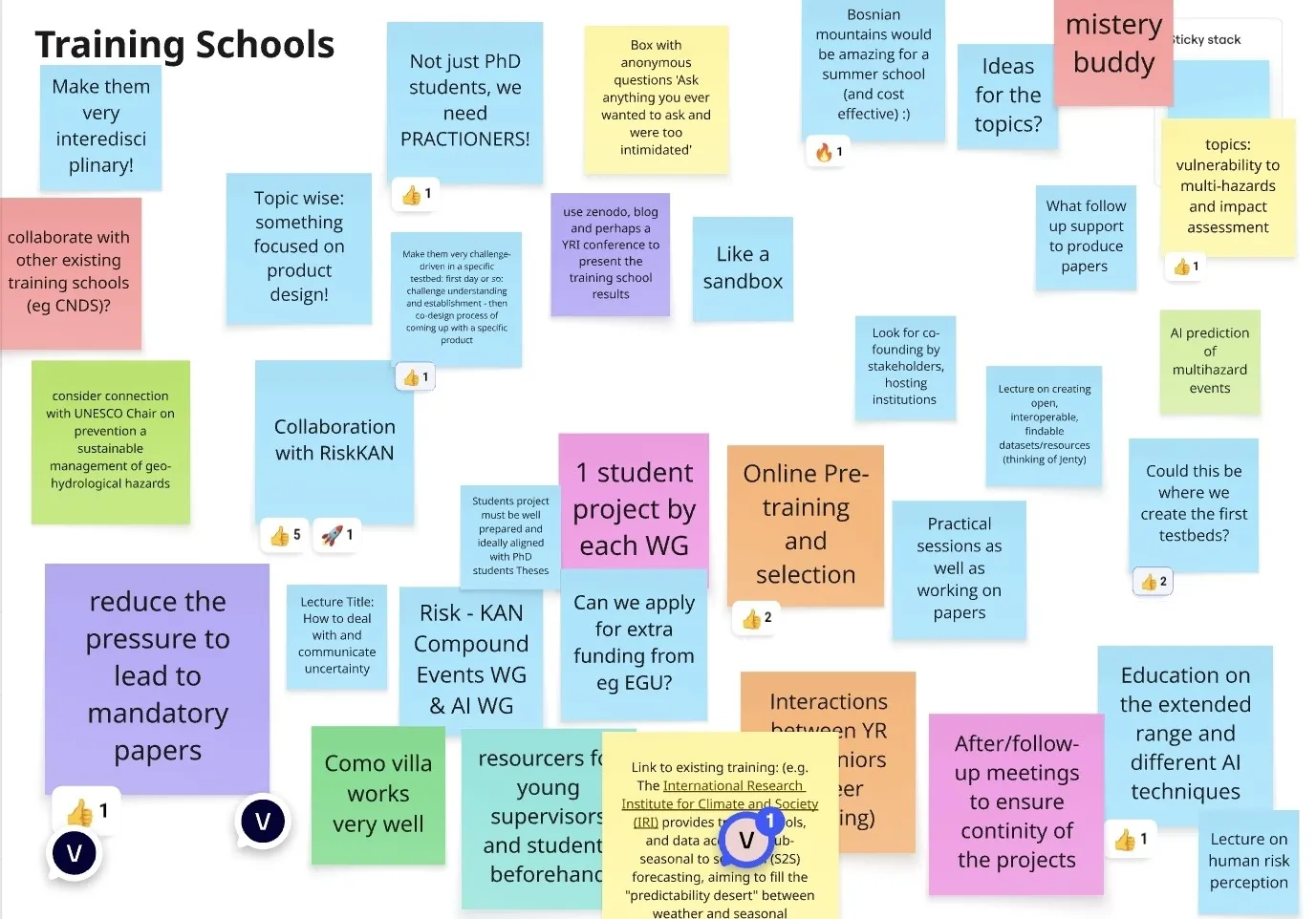
Two days in Glasgow on multi-hazard prediction at extended-range timescales. Here's how my first COST Action meeting went.
Leave a comment